London Marathon - A Classy Route and Great ExperienceFlora London Marathon ; A Race For The Memories
A good guide to a training schedule for London would be a plan that allows fast times on the flat course - and getting used to this. More on that below. In addition to all of this, the Flora London Marathon has a well established charity program and is one of the marathon frontrunners as parts of the World Marathon Major. The date of the 2008 London Marathon was the 13th of April. Here you will find :
New ! Read and share stories/reviews of the London Marathon. Right below is a shortcut to the bottom of this page and the sections for sharing thoughts on London Marathon. Click to share a review, your favorite London Marathon tips, with visitors to this page! Flora London Marathon - HistoryAlthough officially a marathon only since 1981, the first London marathon took place during the summer Olympics in 1908. As an interesting side note, it was at that Olympics that the marathon race took on its modern length. Previously, it had been just under twenty five miles : the traditional distance from the Plains of Marathon to the City of Athens. But, at that Olympics, the British Royal Family asked that the race begin at Windsor Castle, and end in front of the royal box in the Olympic Stadium. This resulted in the race being just over twenty-six miles. At any rate, since 1981, and usually in April, the London Marathon is run. For 2008 the date of the London Marathon was the 13th of April. Not only is it one of the five elite races in the world, part of the World Marathon Majors (together with Berlin Marathon, Chicago Marathon, Boston Marathon and New York City Marathon), but it also holds the record for the most money raised for charities and foundations. Based on data for the 2006 race, a little over 40 million pounds was raised! The London Marathon Route - East and West of the WorldNext up, some views on the London course, including a video where the course is described. London is one of the fastest marathons in the world. A map of the course shows few major turns and a very flat profile. A look at the London Marathon results from the period 2003,2004 up until 2007 shows fantastic results for the winners ; including the marathon female world record of 2.15 by Paula Radcliffe. To take with them prize awards that are some of the top in the world. The race is unique in that the runners start in three different places near Blackheath, on the south bank of the River Thames. Finally, in Woolwich, right where the course passes the Royal Artillery Barracks, all the runners come together for the remainder of the race. A little further on, they reach Greenwich and get a good view of the Cutty Sark, recently ravaged by fire but now back in position and then it is on to Surrey Quays, Bermondsey, and then down the Jamaica Road, which takes the runners on to the Tower Bridge. After that, they cross the Thames, go east on The Highway, and pass through Wapping to get to the Isle of Dogs. This is where the race makes its loop. The runners then return on The Highway, past the Tower of London, and then race along the River Thames' Embankment to the Houses of Parliament. By this point, the end is virtually in sight. The course turns toward Buckingham Palace, and finishes in The Mall. As another interesting side note, the London Marathon is the only one in the world that technically takes place in both the East and West hemispheres, because the London Marathon course crosses the Prime Meridian at Greenwich. Well, here is a info video of the London marathon course, described by race-director Dave Bedford : Scoops on London Marathon Training"Flat, flat, flat - keep those words in mind for the training program for London!" No need for them hills. Training for the London marathon does not involve the hill work and specialized strength work that is absolutely necessary for the Boston and the New York. In London it is much more important to be used to the running for a long distance.... On a very flat course. What this takes is longer marathon training sessions on that kind of flat terrain and the treadmill may actually be a good alternative for parts of that training. Set it at 0,5 in incline and you are about right. If you do have access to the treadmill and want to run some sessions like that, check out the treadmill running article that is posted under "Running Tips" in the main menu. How to Enter and Apply to London Marathon
There are several ways in which you can do this. If you are an international entrant, you can go to their official homepage that you find here and you will find the address, contact information for an international carrier that takes care of the entries. If you are a British citizen you have several options : In August 2007 they launched a new online registration system, where you can enter, and place in your favorite charity to support. In addition to that, there is a possibility to enter through the well-organized British Club system. All information on that, you will find through the above link. London Weather and Broadcasting/Tv Details London weather in the beginning of April can be quite good, but also rainy and even quite hot, something we saw in the 2007 race : At the starting line was probably the strongest marathon field ever, but the winner "only" managed a 2.07 on that particular hot day. The London Marathon can usually be watched either via web tv, local/national channels (if in the UK) or usually on Europsport if in the rest of Europe. Top Places To Stay : Near The TubeLike with the New York Marathon, you want to stay near the London tube/underground system for easy transportation to and from the marathon starting line. Not to speak about the way home after the race.. So try and find a hotel fairly close to that and you will be alright. "No better time to visit - and running near the Thames or in the Parks" The race probably could not take place at a better time of year. London, in April, is quite a beautiful city. It is said that the truly great cities of the world are those you feel comfortable walking in. Well, that is London. It does not matter what your interest, the city has it. Naturally there are countless historic sights to see: museums, castles, galleries; the list is almost endless. From ancient Roman artifacts to mementoes from the Middle Ages, from the reconstructed Globe Theatre to images and museum pieces from the world wars; London has enough history to please any scholar. Of course, London is also a thoroughly modern city as well. You can
As well as running in London can give you a feeling of quietness as you take your morning run next to the Thames or in one of the parks such as Richmond Park. Once the race is done, you can shop, eat, visit, and learn all you care to about this great city hosting the London Marathon.
Want to read about London Marathon or let your voice be heard ? Right below are visitor submissions on what is good, great tips on the London Marathon.
Your London Marathon Review!Have You Run London Marathon Before ?
Ps : see right below the form to read what others have said before you. Make the submission above 150-200 words, so that the readers can really get to know your view on the London Marathon:) |
New : If you want all these principles outlined in a complete plan check out the full 100 day Marathon plan... FULL marathon training schedules "The 100 Day Marathon Training !"
 Enter email address to subscribe for monthly updates and tips. I will not spam your account, only occasional relevant information :)
|
|
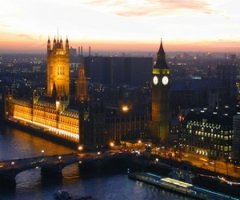 The London Marathon has the mix any marathon would like. The historic route, the fast course (just look at the 2004-2007 results and the Paula Radcliffe world record) and a very well organized program.
  Want to know how to enter the London Marathon ?